⸺Infections of the cervical, thoracic, and lumbar spine⸺
Infections of the cervical, lumbar, and thoracic spine
Spinal infections are rare. They can weaken the spine’s ability to bear weight and make it unstable. Physicians distinguish between primary infections and secondary infections that develop following an infection elsewhere in the body or in the spine itself. Spinal infections can also occur after surgery, although postoperative wound infections occur in fewer than 1% of cases.
Nonsurgical treatment
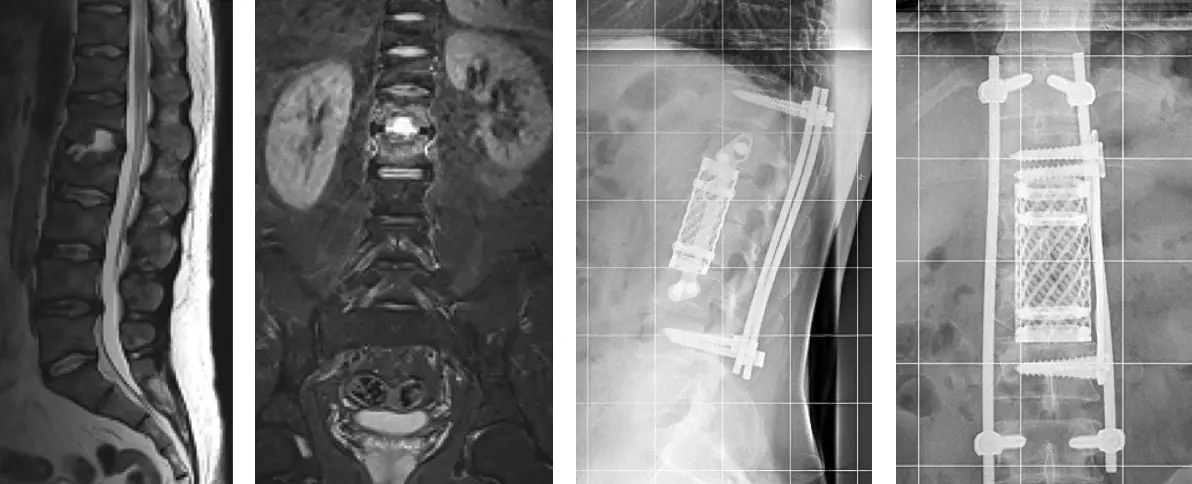
Depending on how extensive an infection is and which parts of the spine are affected, it may be treated without surgery using antibiotics and pain medication. The areas of infection must first be located using MRI, CT, or x-ray imaging.
Surgical treatment
Patients will require surgery if the infection has weakened the bone, caused neurological problems, or is spreading in a potentially dangerous way. The infected tissue is removed and the affected vertebrae are stabilized. During surgery, tissue samples are taken to help select the most effective antibiotic. Minimally invasive techniques are often used.