
⸺Scoliosis⸺
Scoliosis – causes and modern treatments for spinal curvature
Scoliosis is the general term for a spinal deformity and derives from the Greek word scolios, meaning “crooked.” It can occur anywhere along the spine, from the neck to the lumbar region, and sometimes in more than one area at the same time.
The condition is classified as either idiopathic or secondary scoliosis. Secondary scoliosis is less common and is often caused by abnormalities present from birth (congenital abnormalities), systemic diseases, or disorders affecting the nerves or muscles. In around 80–90% of people with scoliosis, the condition is known as idiopathic scoliosis, meaning its cause is not fully understood. However, hormonal, neurological, and muscular factors are thought to play a role. The tendency to develop scoliosis also appears to be inherited, as the condition tends to run in families.
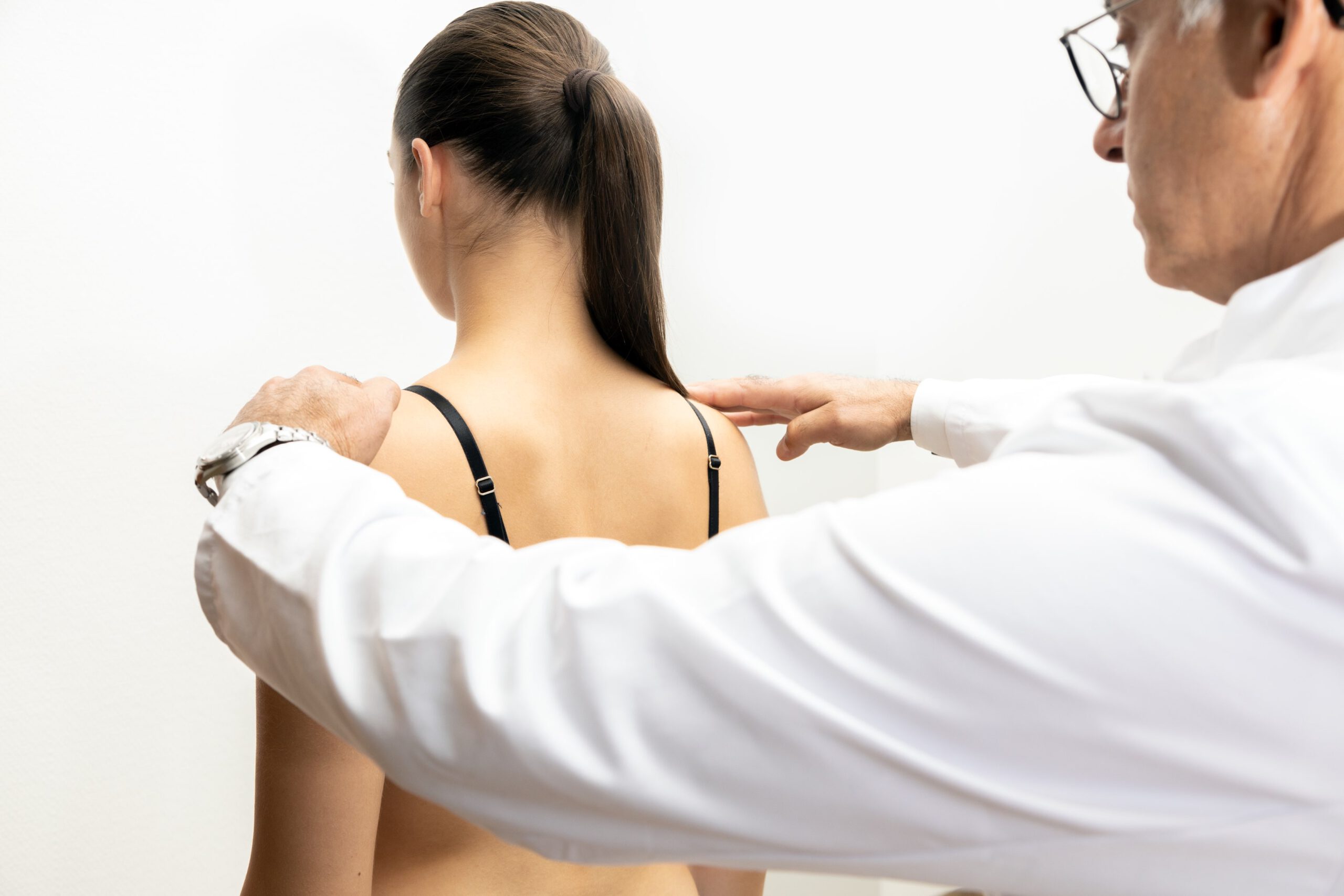
Idiopathic scoliosis – types by age and severity
Idiopathic scoliosis that develops before age three is known as infantile scoliosis. When it develops between ages four and ten, it is referred to as juvenile scoliosis, and from age eleven onward as adolescent scoliosis. Adult scoliosis is also being diagnosed with increasing frequency.
Around 3–5% of people in Germany are affected by scoliosis. Physicians classify scoliosis by measuring the “Cobb angle”, which indicates the degree of spinal curvature and therefore how severe the scoliosis is. The angle is measured using x-ray images. By definition, scoliosis is diagnosed only when the Cobb angle is 10 degrees or greater. Scoliosis is six times more common in girls than in boys, and girls are ten times more likely than boys to have a Cobb angle greater than 30 degrees.
If scoliosis is left untreated, the spinal deformity will generally continue to worsen. This can lead to restrictions in the range of motion, stiffness, and degenerative changes in the affected or adjacent vertebrae.
What are the physical signs of idiopathic scoliosis?
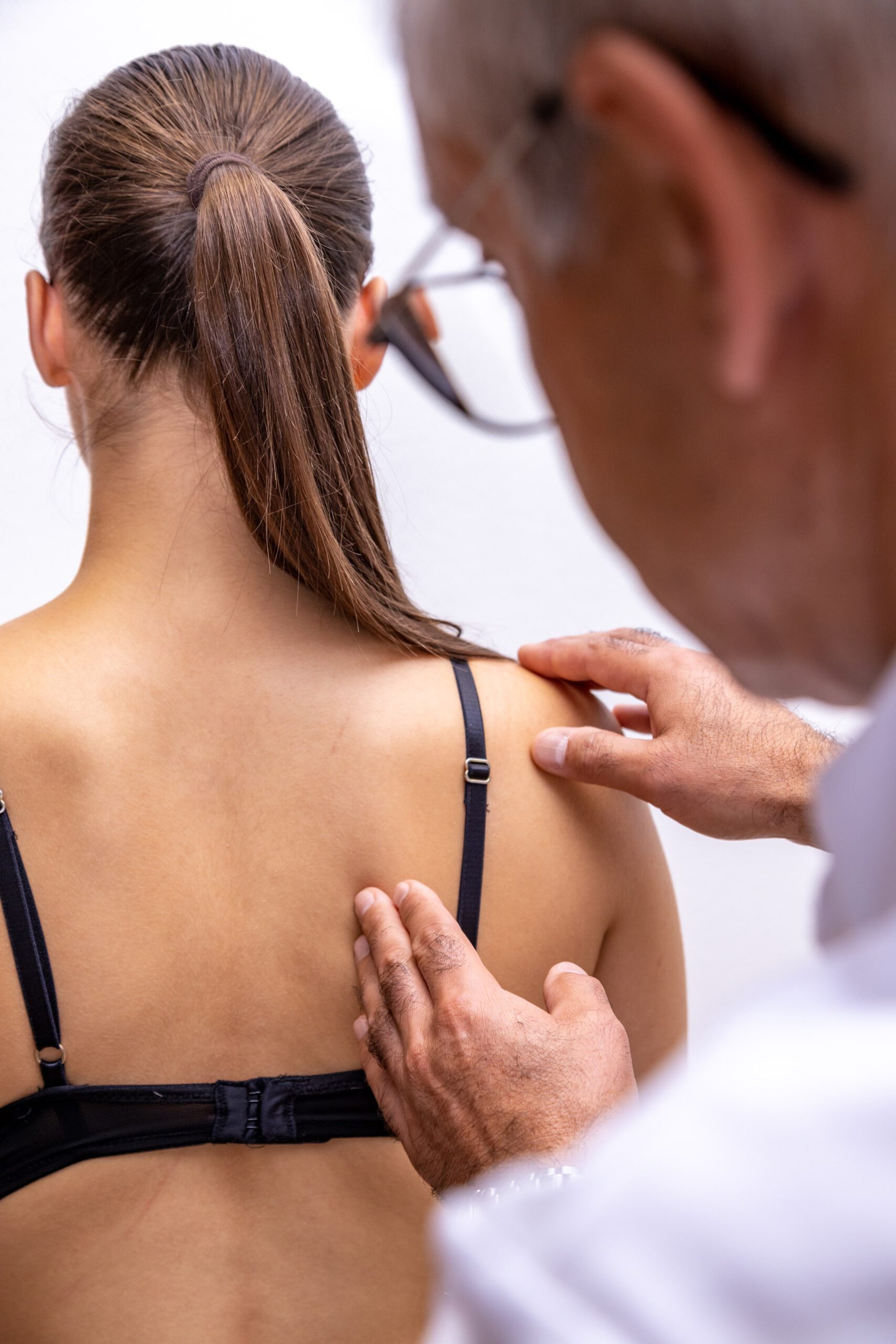
More advanced scoliosis may become visible as a rib hump or depression, asymmetry of the neck muscles or waist, a tilted head, or one shoulder and/or one side of the pelvis sitting lower than the other. In severe cases, the uneven stresses on the body can cause muscle and joint problems and may also impair lung and heart function. Early detection is crucial, whether at routine checkups or through careful observation by parents.
Nonsurgical treatment
When a child is first diagnosed with scoliosis and the Cobb angle is 20 degrees or less, treatment begins with a nonsurgical plan.
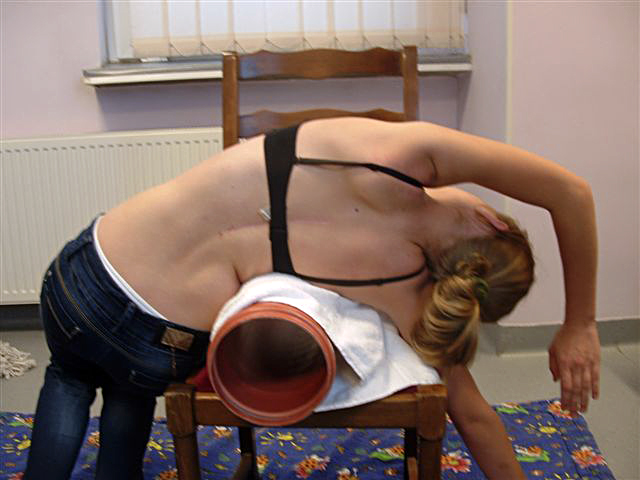
This plan will include education for parents and young patients, physical therapy, shoe inserts if needed to compensate for differences in leg length, and regular follow-up with the treating physician. If the Cobb angle exceeds 20 degrees and there are additional risk factors, such as the child’s age, skeletal maturity, or rapid progression of the scoliosis, brace treatment is usually recommended. The brace is designed to guide the child’s growth and correct the scoliosis as much as possible, maintaining the improved alignment until the child has stopped growing. The brace is custom-made from thermoplastic material using an individual mold and shaped to apply corrective pressure to the outward curve of the spine. To be effective, the brace needs to be worn both day and night. The aim is to avoid surgery altogether or, in very young patients, at least delay it. If the patient and family make sure the brace is worn correctly and follow the treatment plan consistently, brace treatment has been shown to be effective.
Successful nonsurgical treatment depends on having the first brace properly fitted by an experienced orthotist, combined with physical therapy and instruction in exercises that the patient can perform independently.

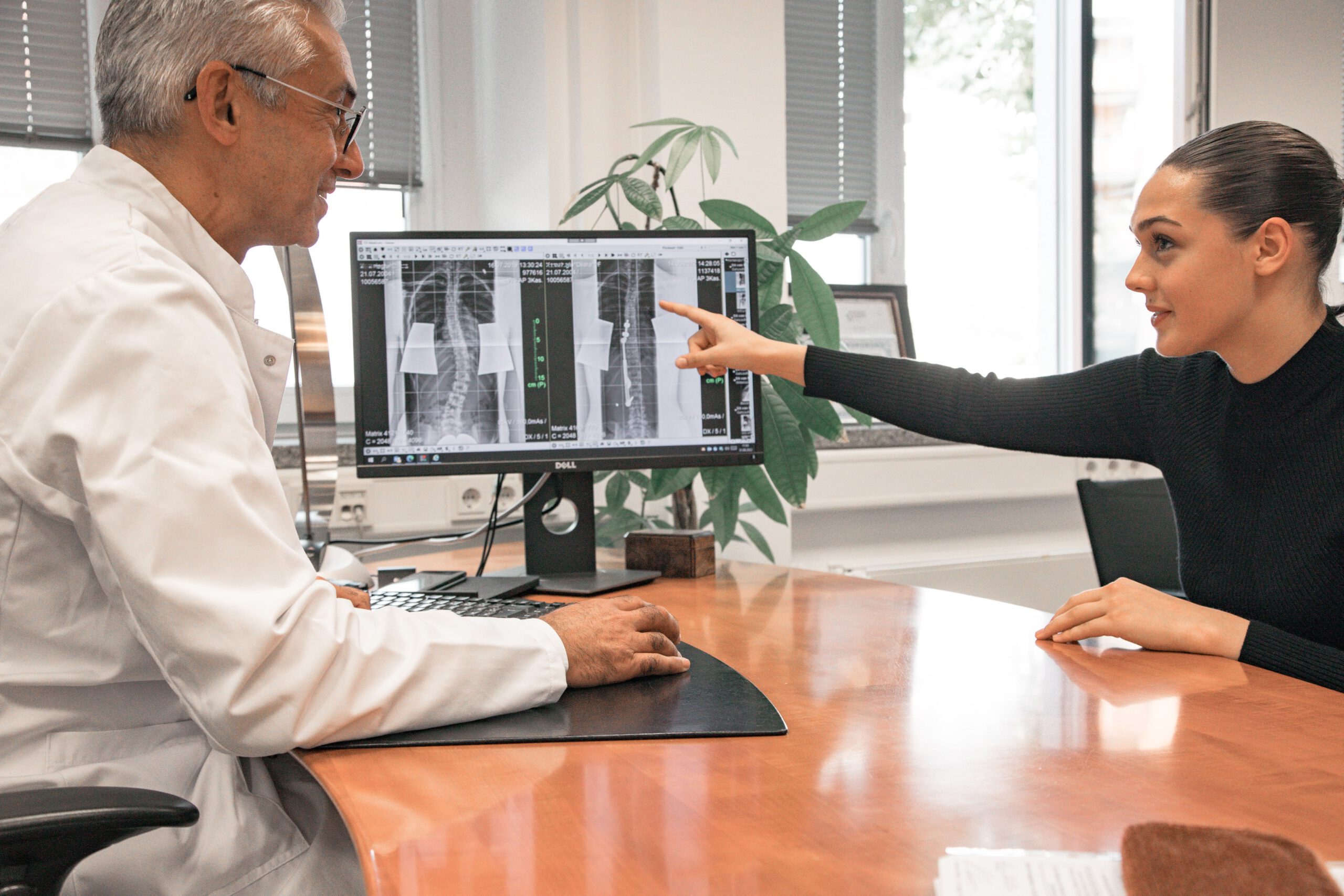
Surgical treatment in children and adolescents
Patients with rapidly progressing, more severe scoliosis may require surgery. The aim is to correct the scoliosis, restore good overall balance, and improve the patient’s appearance.
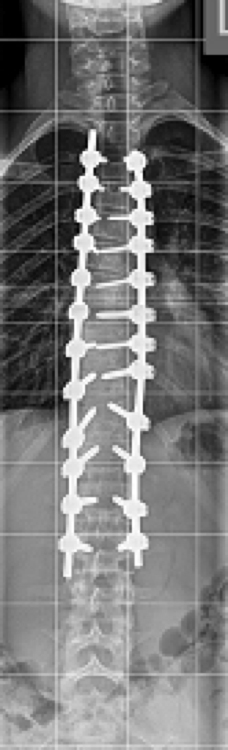
In conventional spinal fusion, screws are placed in the vertebrae and connected by rods to correct the curvature and stabilize the spine in its corrected position. The more severe the scoliosis and the stiffer the spine has become, the more complex the surgery required to correct it.
Some patients with idiopathic scoliosis experience rapid progression during growth, especially during puberty. In this situation, waiting too long while simply monitoring the condition can allow the curvature to become severe by the end of growth, often making complex surgery necessary to correct it. Effective brace treatment can be supplemented in these patients with growth-guided surgical correction techniques. These include ApiFix and vertebral body tethering (VBT).
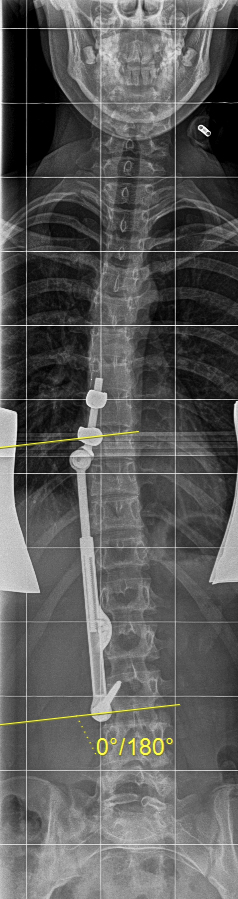
In recent years, ApiFix has increasingly been used as an alternative to conventional spinal fusion in patients whose spine is still sufficiently flexible and whose curvature is not yet too severe. The ApiFix system is anchored to the spine at three points and can then be gradually lengthened using a ratcheting mechanism, helping to straighten the spine. The method has several advantages: the spine remains mobile, the procedure is less extensive and takes only about an hour, blood loss is minimal, and patients can usually go home after three to four days.
The implant is removed once growth is complete, or no later than three to four years after implantation.