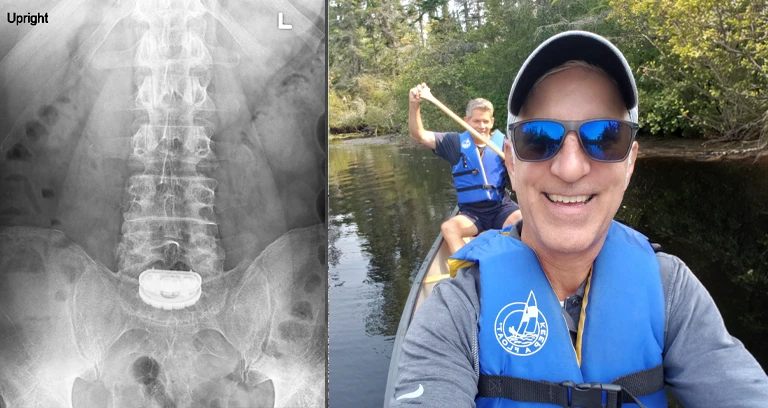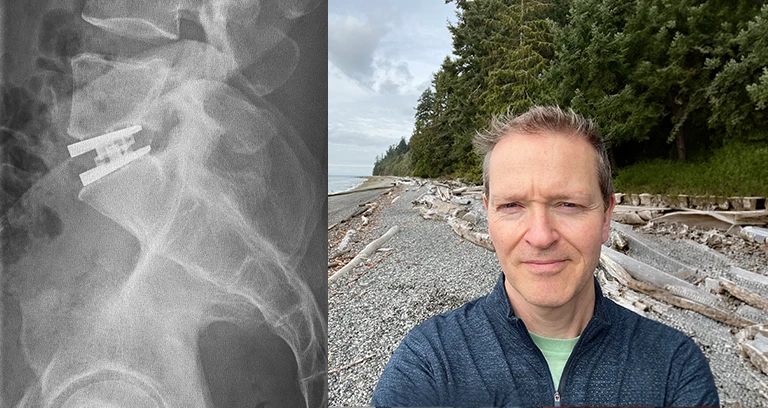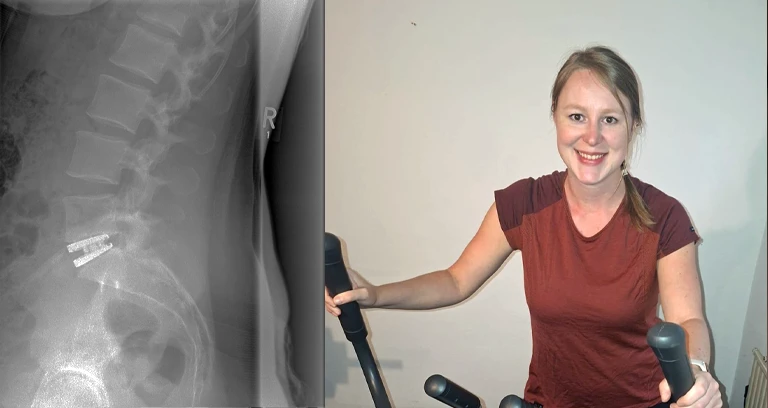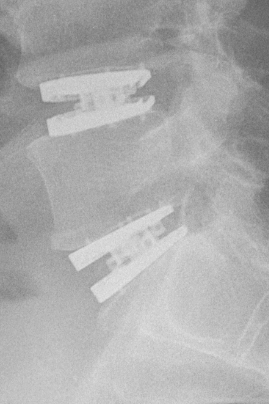
The top image shows the result of the post-operative procedure, the bottom image shows the patient's condition 4 months post-operatively.
Trust – Bisegmental Disc Replacement
Easter 2026. There are four of us on a ski traverse of the Venediger Group. In very bad weather, we set out from the Johannishütte. Our hope for improving conditions is swallowed up by the rolling fog. We continue through a snowstorm across crevassed glaciers while all the other groups turn back. Around noon, we reach the summit. Our clothing is iced over, it is bitterly cold, and visibility is almost zero. Ahead of us lies the long descent over the north-facing glacier, which is riddled with large crevasses.
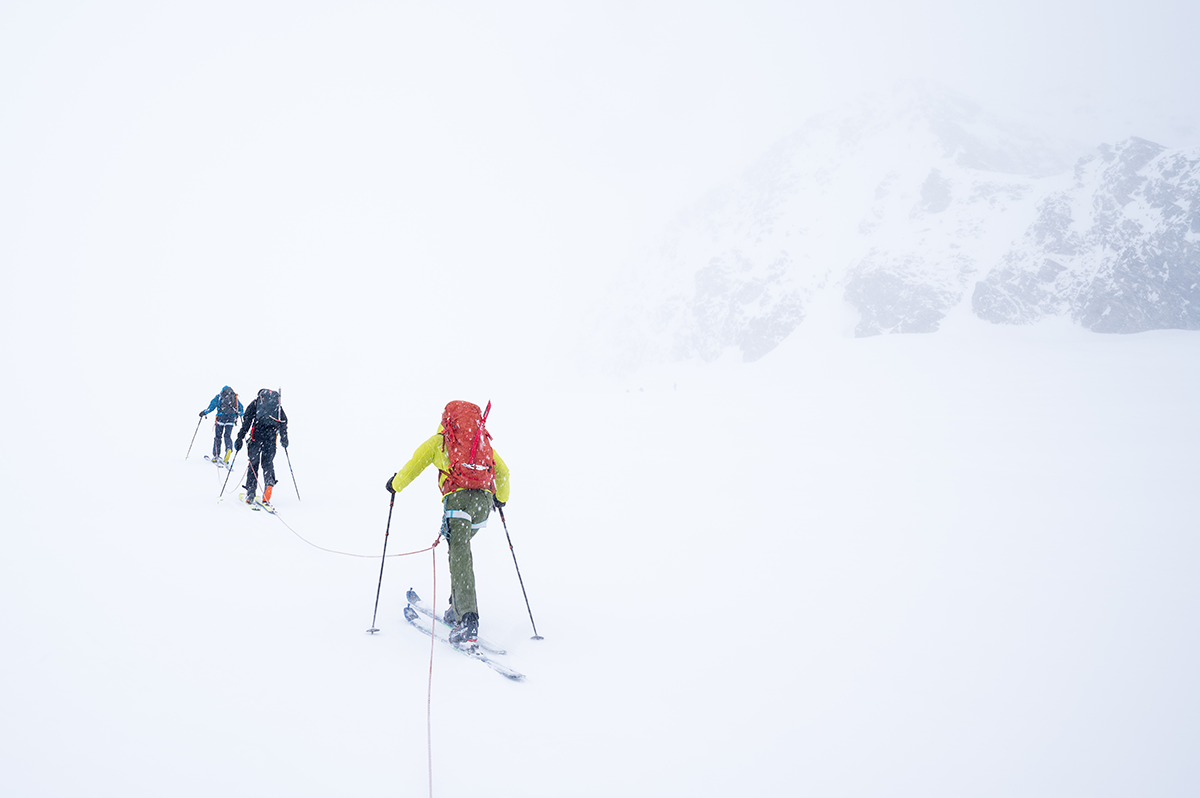
It is terrain in which you do not want to be out with people you don't trust. My son is with me, one of the few people to whom I entrust my life in the mountains. We cross the large bergschrund at the Venedigerscharte, ski down roped up through crevassed terrain, and finally reach the Kürsingerhütte safely. In the most adverse conditions, we have traversed the Großvenediger (3,664 m) from south to north, a tour I would not do without a companion I trust completely.
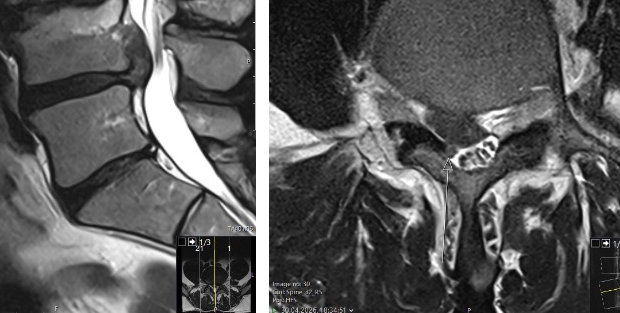
A week later, on a mountain bike tour in the Chiemgau, it happens: a simple fall, nothing dramatic, a tree root blocks the front wheel. I feel immediately that something is wrong. I push my bike until the terrain gets easier, and then we ride down. The following weeks are marked by pain. That in itself is nothing new; I have known for almost 30 years that my intervertebral discs are not the best. Over the years I have repeatedly had back pain, but this time it is different. There is almost no pain-free position left, and at times I can't sleep at night because of the pain. I have an MRI done, and the images shatter any illusions I might still have had. The segments L4-L5 and L5-S1 show severe loss of disc height and degenerative wear, and the pain is caused by a massive disc herniation at the L4-L5 level. On top of the pain, there is a right-sided foot drop (paresis of the foot extensors). I know what this means: I have worked in medical technology for over 25 years, most of that time in spine surgery. Over the years I have seen many similar images, except that it was not my back, but that of patients treated with products from the companies I worked for.
Now I am the patient myself, and yet something sets me apart from most others. For over 25 years, I have stood in operating rooms all over the world and seen a wide variety of spinal procedures, from South America through the USA and Europe to Asia. I have been allowed to observe many surgeons, and I have seen some who operate superbly, but also many to whom I would not entrust my health. It was always clear to me that, first and foremost, I hoped never to need spinal surgery. But it had also long been clear to me that there are very few to whom I would entrust my health, and whom I would ask for help first.
As soon as I had the MRI, I spoke with Dr. Desai. We have known each other for almost 15 years now, and I was often allowed to observe him performing spine surgery in the OR. These experiences made it lastingly clear to me why the German words for profession (Beruf) and calling (Berufung) share the same root. I trust him completely, both in terms of his experience and expertise in spinal disorders and with regard to his surgical skills. After several phone calls, the decision was quickly made: of all the options, a bisegmental disc replacement offers me the greatest chance of a high quality of life in the long term and of continuing my alpine pursuits.
On May 6, 2026, I got to know the Sana Klinikum Köln Braunsfeld in an entirely different way: as a patient. I had often been there on business, but now everything was different. This experience has broadened my view of the hospital and of Dr. Desai once more. From the very beginning, I felt wonderfully cared for, from admission through the ward to the OR team. During induction for the surgery, Dr. Desai stopped by once more for a brief conversation before the anesthesia took effect.
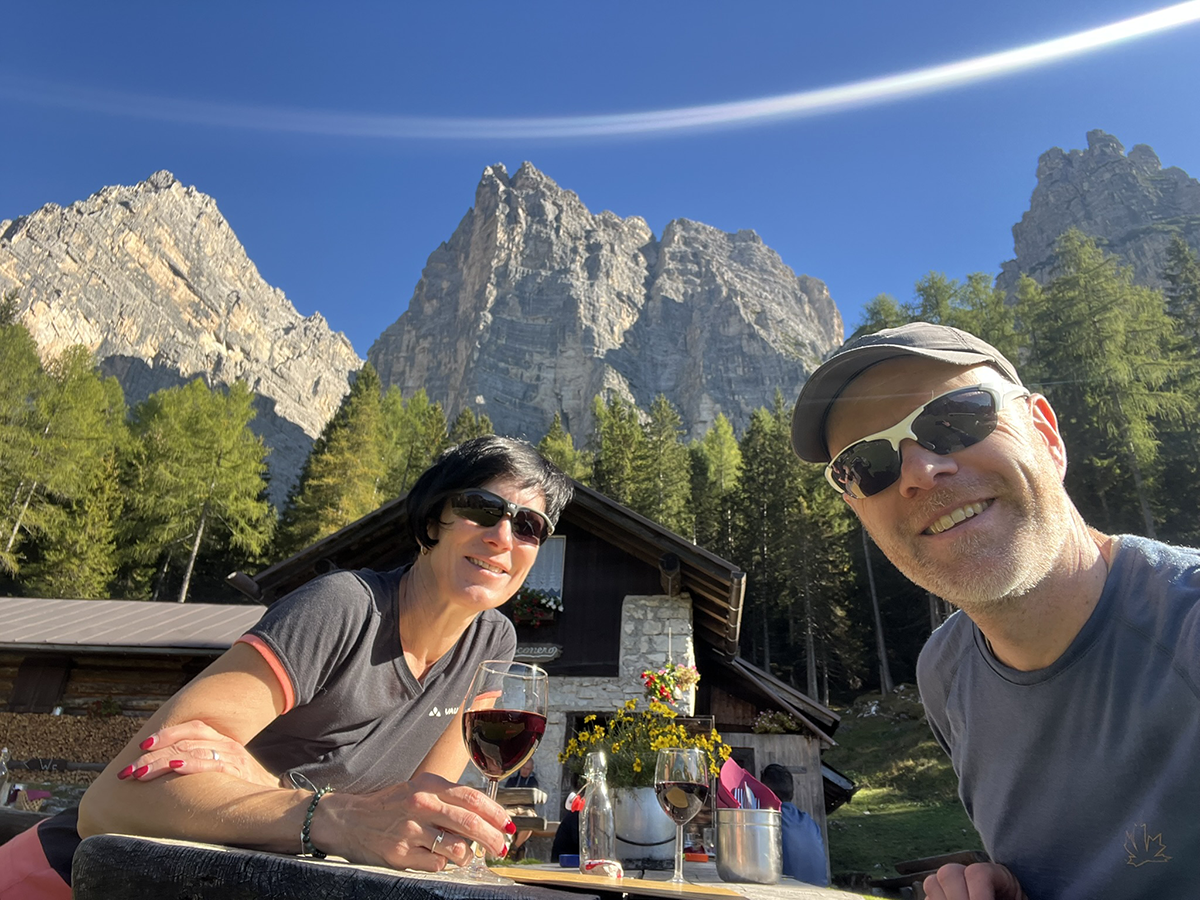
As I write this, I am in Italy with my wife, mountaineering. The day before yesterday, we climbed Sasso di Bosconero, a steep peak in the Belluno Dolomites. I am four months post-op, have been completely pain-free for some time, and if I have any limitations at all, it's that common sense tells me to still take it slowly. Well, 1,700 meters of elevation gain and descent may not be entirely slow, but I feel good doing it. Since the surgery, I no longer know what back pain is, apart from the few weeks of the postoperative phase, during which the muscles had to adjust to the new situation. My wife and I are now on our way to the Abruzzo region to climb the Corno Grande, at 2,912 m the highest peak in the Apennines' Abruzzo range. Besides my son, my wife is one of the few people to whom I unconditionally entrust my life while mountaineering, just as I entrusted Dr. Desai with my health, and my life, without hesitation. I am back in my beloved mountains as if nothing had happened, and yet something is different: I am grateful that this is still possible for me, without restriction. I am grateful to have people like my son and my wife in my life, people I can trust in the mountains. And I am grateful that my professional path brought Dr. Desai and me together, and that his skills as a physician continue to allow me to lead the life I love so much. It is a good feeling to know people like him in my life, as a physician, as a person, and as a friend. Thank you, Biren, for everything!
Florian K.